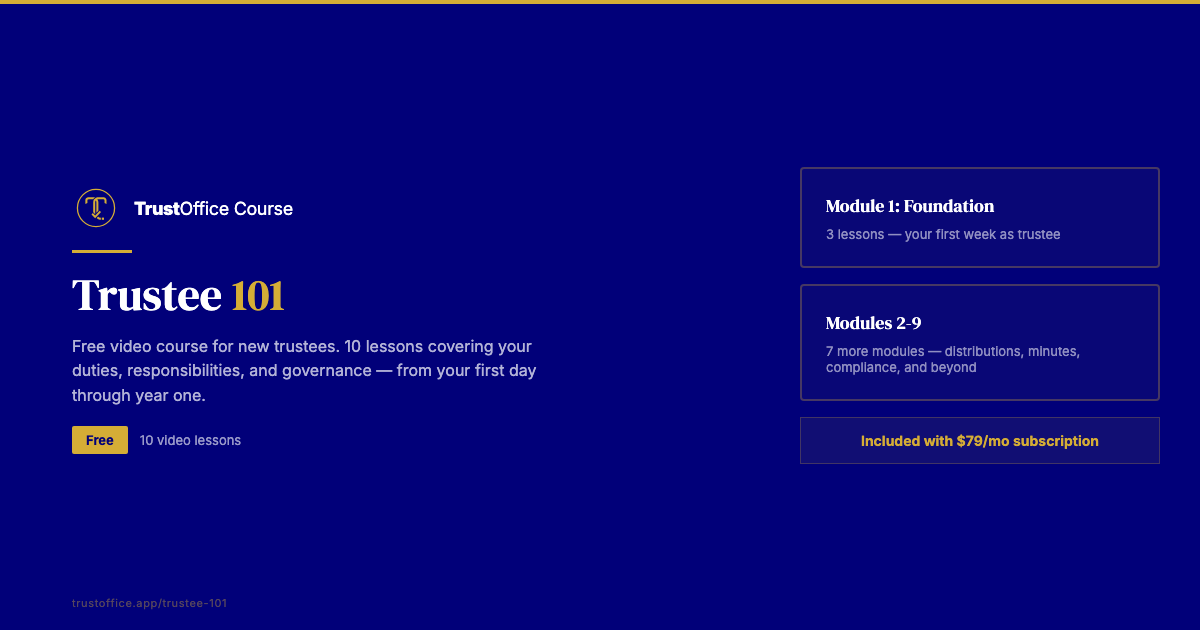
Get started in a Free Fiduciary Professional Course to Elevate Your Proficiencies Today
Taking a free trustee course can significantly boost one's professional abilities. It offers vital information regarding trustee duties and wealth management. Learners can advance at their own tempo while engaging with experienced practitioners. This option not only deepens comprehension but also paves the way for career progress. However, many may consider what tangible abilities they can expect to develop and how these can be applied in practical contexts.

Core Proficiencies You'll Achieve From a Free Trustee Course
A free trustee program furnishes participants with essential skills vital for sound management and oversight. The curriculum typically includes key topics such as financial literacy, permitting trustees to comprehend budgets, financial statements, and investment approaches. Participants also gain insights into regulatory obligations, ensuring compliance with laws and ethical standards.
Furthermore, the course strengthens tactical planning capabilities, preparing people to contribute to extended organizational objectives. Effective communication abilities are another crucial aspect, enabling board members to articulate ideas distinctly and engage stakeholders successfully.
In addition, collaborative and managerial skills are emphasized, fostering collaboration among board members and furthering a constructive decision-making process. Dispute management strategies are also taught, equipping participants to address disagreements professionally.
Ultimately, these competencies not only prepare individuals for their roles as trustees but also enhance their overall management skills, making them precious resources to any organization.
Primary Benefits to copyright for a Free Trustee Program for Job Progression
Numerous practitioners look for strategies to improve their professional lives, and taking a costless trustee course delivers unique gains that can powerfully elevate one's trajectory. First and foremost, these courses provide fundamental insights about fiduciary responsibilities, improving a professional's credibility in their field. Understanding the ethical and legal responsibilities of a trustee can reveal emerging professional openings and responsibilities.
Furthermore, engaging with industry professionals and colleagues during these courses can lead to valuable relationships that may facilitate career growth. Participants also gain hands-on expertise in accounting and oversight, which are increasingly sought after in various industries. Finally, the flexibility of online formats permits individuals to learn at their own speed, making it easier to manage education with current work obligations. Overall, signing up for a free trustee course not only enriches knowledge but can also greatly enhance professional opportunities and career growth.
Discovering the Ideal No-Cost Trustee Class for You
How might one find the most ideal free trustee course from the wide variety on offer? First, individuals must assess their distinct goals and career goals, pinpointing what skills or knowledge deficiencies they intend to cover. Next, researching course content and structure is essential; a detailed curriculum plan can suggest whether the course will satisfy individual requirements.
Moreover, copyrightining the qualifications of the teaching staff can provide understanding into the quality of education offered. Reviews and testimonials previous students are essential, as they showcase authentic experiences and outcomes.
Finally, evaluating the adaptability of the course design—whether it is independent-paced or scheduled—can support in choosing a course that addresses one's personal commitments. By considering these aspects, individuals can determine a more well-reasoned choice, confirming the selected program reflects their professional aspirations and learning preferences.
Proven Tips for Receiving Maximum Benefit from Your Trustee Course
Achieving the maximum benefits of a trustee course calls for a careful approach. Participants need to initiate by establishing clear goals and identifying the exact skills or knowledge they aim to acquire. Active participation in the learning experience is essential; this includes joining discussions, posing questions, and working with peers. Regular review of the course materials aids in reinforcing understanding and retention of fundamental concepts.
Additionally, it is beneficial to take notes and compile outlines of important topics, facilitating simpler review later. Connecting with fellow participants can provide valuable insights and assistance, cultivating a sense of community. Leveraging supplementary resources, such as suggested texts or web-based discussions, can enhance understanding and implementation of acquired knowledge.
In conclusion, utilizing the information in real-world contexts, whether through real-world applications or simulations, consolidates learning and increases confidence in trustee obligations. By implementing these strategies, individuals can completely capitalize on their trustee course instruction for career and personal advancement.
Practical Implementations of Fiduciary Expertise in Management
Trustee expertise serve as a cornerstone in successful organizational oversight, allowing individuals to traverse complex organizational landscapes. These abilities are critical for promoting openness, responsibility, and principled choices within different organizations, including nonprofits, educational institutions, and corporate boards. Trustees equipped with strong analytical abilities can assess organizational results, financial health, and compliance with regulations, thereby enhancing overall governance.
Moreover, effective communication skills allow trustees to engage with stakeholders, ensuring that diverse perspectives are taken into account in decision-making processes. Dispute resolution skills are just as vital, since they help maintain harmony and collaboration among board members and other stakeholders. Additionally, long-term planning capabilities enable trustees to align organizational goals with source wider objectives, ensuring sustainability and growth. In this way, the application of trustee skills in governance strengthens institutional frameworks but also promotes trust and integrity within communities and organizations.
Frequently Commonly Asked Questions
Are No-cost Fiduciary Training Recognized by Industry Associations?
Free trustee courses may not always be acknowledged by trade associations. Accreditation generally copyrights on the program provider and the specific accrediting body, so candidates should validate credentials before signing up for any course.
What Length of time Does a Common Free Trustee Course Need to Finish?
A standard free trustee program generally takes between four to eight weeks to finish. Course length may differ depending on the organization, material depth, and participant engagement, allowing for adaptability in learning schedules.
Will I Be Awarded a Certificate After Finishing a Free Trustee Course?
Yes, attendees can generally get a diploma after finishing a free trustee program. However, certification availability may differ by provider, so participants should verify the specific details with the course organization before registering.
What Restrictions Apply on the Quantity of Trustee Courses I Can Register For?
There is typically no limit to the number of trustee courses one can take part in. Individuals are encouraged to complete multiple courses to expand their knowledge and skills in trustee responsibilities and governance.
What Conditions Are Necessary for Participating in a Free Trustee Course?
To join a free trustee class, learners typically need a basic understanding of financial principles, commitment to the course duration, and sometimes prior experience in fiduciary roles. Specific requirements may differ by institution.